Stride length and flywheel, before any program count · review
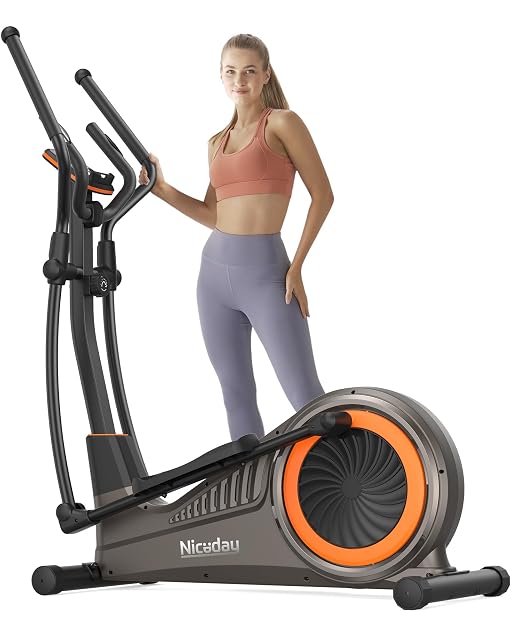
Neezee Magnetic Cross Trainer, 16 Levels review
A short 13 in (33 cm) stride, published with the user height it suits: 4 ft 9 in to 5 ft 10 in (1.45 to 1.78 m). The pairing is what makes the figure useful.
Stride length 33 cm (13 in), for users from 1.45 to 1.78 m (5 to 6 ft)
Flywheel 6 kg (13.2 lb), in a ring-shaped internal magnetic control system
16 resistance levels
Noise under 20 dB
Capacity 130 kg (286.6 lb)
Pedals 38 × 12 cm (15 × 4.7 in)
LCD monitor with heart rate sensor: time, distance, calories, heart rate
Adjustable stabilisers
Stride tied to a height
Thirty-three centimeters, for 1.45 to 1.78 meters (5 to 6 ft).
This is the pairing that makes a stride figure mean something. A number on its
own says nothing about whether a machine suits a person; a number with the
range it was designed for does.
It is also an honest way to sell the shortest stride on a shelf — rather than
describing it as compact and leaving the buyer to find out.
The pedal size
Thirty-eight by twelve centimeters, published. No other listing in this family
gives a pedal dimension.
It matters because a foot sits on it for the whole session. A narrow pedal
pushes the foot toward one edge and a short one leaves the heel unsupported,
and neither shows up in a photograph.
The flywheel
Six kilograms, at the lower end of what this family publishes — the Sportstech
elsewhere here gives 24 kg (52.9 lb).
Lighter means each revolution carries less momentum through the top and bottom
of the circle, which is a behavior rather than a fault, and it is reported
because the maker published it.
The noise figure
Under 20 dB, with no stated condition — no resistance setting, no cadence, no
measuring distance. Four machines in this family publish the same figure the
same way.
Availability
The American Amazon catalog lists the reference with nobody selling behind it.
These figures are what Keepa returned on the day this page was last written. Stock and prices move without notice.
The figures declared, and the gaps beside them
Strengths
Publishes a stride length AND the user height range it suits — 1.45 to 1.78 m (5 to 6 ft)
Publishes the pedal size at 15 × 4.7 in (38 × 12 cm)
A noise figure of under 20 dB with a 6 kg (13.2 lb) flywheel
Compromises
A 33 cm (13 in) stride is the shortest in this family and suits a narrow height band
No footprint published
The 20 dB figure carries no measuring condition
Specifications
Stride length
33 cm (13 in)
Flywheel mass
6 kg (13.2 lb)
Resistance levels
16
Max user weight
130 kg (286.6 lb), as the maker states it
Footprint
Not published; pedals measure 38 × 12 cm (15 × 4.7 in)
Console readings
LCD with heart rate sensor: time, distance, calories, heart rate
Amazon reference
B0H1HH1D6J (one reference across 6 Amazon marketplaces)
EAN
0604634365278
What buyers ask about this one
Is a 33 cm (13 in) stride too short?
It is among the shortest here, and the maker is direct about who it suits: users from 1.45 to 1.78 m (5 to 6 ft). For somebody inside that band it is the machine designed around them; for somebody taller it is a step rather than a stride, and the MERACH at 47 cm (18.5 in) elsewhere in this family exists for exactly that reason.
Why does the pedal size matter?
Because a foot has to sit on it. Thirty-eight by twelve centimeters is published, and no other listing in this family gives a pedal dimension at all — which makes it a real point of comparison where none otherwise exists.
What does a 6 kg (13.2 lb) flywheel do?
It carries momentum through the top and bottom of the pedal circle, which is what makes the motion feel continuous. Six kilograms is at the lower end of what this family publishes; the Sportstech here gives 24 kg (52.9 lb).
Our score
7.8/ 10
The machine that says who it is for. A 13 in (33 cm) stride published with a 4 ft 9 in to 5 ft 10 in (1.45 to 1.78 m) height range is a maker matching a measurement to a body, and it is the most honest thing a short-stride machine can do. Add a published pedal size, 15 × 4.7 in (38 × 12 cm), and it becomes the right answer for a shorter user rather than a compromise.
The price on Amazon.com
This model is listed on Amazon.com, with no price read at the last reading. Listed is not the same as in stock: availability changes daily, and the buy box shows the live price.
Details checked on September 20, 2026.
Who this one is for, among strength training equipment
A shorter user for whom a long-stride machine would be a stretch
Sources
Specifications: the manufacturer sheet for home gym equipment and the matching Amazon product page. Prices and availability: Keepa. Every figure on this page names its source.
16 in stride, 16 lb flywheel, 16 magnetic levels, 400 lb, 20 dB stated, Kinomap
A magnetic elliptical that publishes its flywheel — 16 lb — alongside a 16 in stride for users up to 6 ft 1 in, 16 resistance levels, a 400 lb capacity, six console readings including heart rate and Kinomap support.
Best for: Smooth daily sessions for a household, with app-based scenic workouts
16 in stride, front drive, dual aluminum rails, 16 magnetic levels, belt drive, pulse sensors, 97 lb
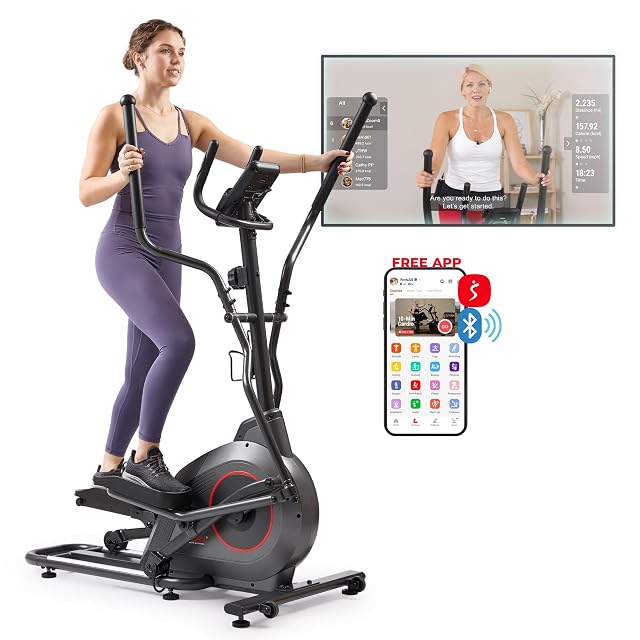
A front-drive upright elliptical with a true 16 in stride on dual aluminum rails, 16 magnetic levels, a belt drive, handlebar pulse sensors, an LCD showing six readings including RPM and the SunnyFit app — and a main frame that arrives pre-assembled.
Best for: A full stride for taller users in a quiet machine, sold and supported in the US
16 in stride, 14 magnetic levels, 500 lb, hand pulse sensors, lifetime warranty
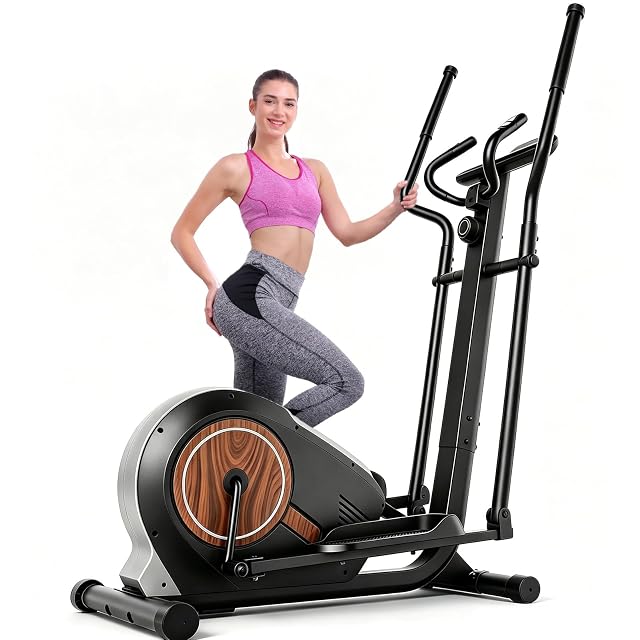
A magnetic elliptical with a 16 in stride, 14 resistance levels, a 500 lb capacity — the highest of the ellipticals here — hand pulse sensors and a lifetime warranty with free replacement parts, in black and silver or charcoal.
Best for: Heavier users who want a full 16 in stride and a long warranty
A figure written into a sentence below was read once, on the day that sentence was written, and nothing has refreshed it since. The amount a shop is asking right now loads beside the product itself — that is the only one still current.