The reference air rower: a PM5 monitor with Bluetooth and ANT+, a 500 lb user capacity, a 14 in seat height, an aluminum I-beam monorail with a stainless steel track, a 9 × 4 ft recommended space and a 5-year frame warranty.
Air resistance, flywheel designed to minimize noise
PM5 Performance Monitor, Bluetooth and ANT+; device holder for 40+ apps
14 in seat height; adjustable footrests
Aluminum I-beam monorail, stainless steel track; aluminum front legs, steel rear legs
Separates into two pieces; caster wheels
9 × 4 ft recommended space; 500 lb user capacity; 5-year frame warranty
Two D cell batteries; the monitor also runs off the flywheel
The monitor is the product
Every rower here shows time, distance and calories. The PM5 shows them in a way that matches every other Concept2 machine — the same split, the same watts — so a 2,000 m time means something outside your house. That is why it is the machine training plans are written for.
Air, and what it costs
Air resistance answers effort: pull harder, and it pushes back harder. It needs no setting. It is also the loudest option; through a floor at 6 a.m., it will be heard.
The seat height
Fourteen inches is higher than most magnetic rowers, which sit closer to the floor. For anyone with stiff knees or hips, getting on and off matters.
What the listing leaves out
Rail length and the stored footprint in plain terms.
Figures are read from the Amazon.com listing on November 8, 2026. Price and stock change without notice.
The figures declared, and the gaps beside them
Strengths
PM5 monitor gives data comparable across Concept2 machines
500 lb user capacity, the highest here
14 in seat height, easier to mount than low magnetic rowers
Splits in two for storage; 5-year frame warranty
Compromises
About $1,045, several times the other rowers here
Air resistance is the loudest kind
Needs 9 × 4 ft of floor in use
Specifications
Resistance type
Air, flywheel with adjustable damper
Rail length
Not published; aluminum I-beam monorail with stainless steel track
Resistance levels
Damper setting; resistance also rises with stroke effort
Max user weight
500 lb (227 kg)
Stored size
Separates into two pieces; caster wheels; 96 × 24 × 14 in as Amazon lists the item
Console readings
PM5 Performance Monitor; Bluetooth and ANT+ to apps and heart-rate monitors
Seat height
14 in (36 cm)
Workout space
9 × 4 ft (2.7 × 1.2 m) recommended
Power
Two D cell batteries; the monitor also draws power from the flywheel
Warranty
5 years on the frame
Amazon reference
B00NH9WEUA (Amazon.com)
EAN
0848688027120
What buyers ask about this one
Why does the PM5 matter?
It reports the same measurements — split per 500 m, watts, stroke rate — the same way on every Concept2 rower, so results can be compared with other people and with published training plans.
How noisy is it?
Air rowers make a whoosh that rises with effort. Concept2 says the flywheel is designed to minimize noise, but it remains louder than the magnetic rowers on this shelf, which quote 15 to 30 dB.
How does it store?
It separates into two pieces, and caster wheels move it. It does not fold upright the way most magnetic rowers do.
Our score
8.8/ 10
Five times the price of the magnetic rowers here, and the only one whose numbers mean the same thing on any other machine of its kind. The PM5 is the standard monitor for indoor rowing, 500 lb is the highest capacity on this shelf, and the 14 in seat is the easiest to get on and off. It is loud, as every air rower is.
The price on Amazon.com
This model is listed on Amazon.com, at ≈ $1,045 at the last reading. Listed is not the same as in stock: availability changes daily, and the buy box shows the live price.
Details checked on November 8, 2026.
Who this one is for, among strength training equipment
Daily training where comparable data matters — splits, stroke rate, and results that match other rowers
What buyers actually choose
Amazon reports what buyers took in the month before this page was last checked: at least 600.
The figure is a floor, rounded by Amazon, and read through Keepa — it says what buyers picked, not what a maker claims.
This model in our strength training equipment guides
Specifications: the manufacturer sheet for home gym equipment and the matching Amazon product page. Prices and availability: Keepa. Every figure on this page names its source.
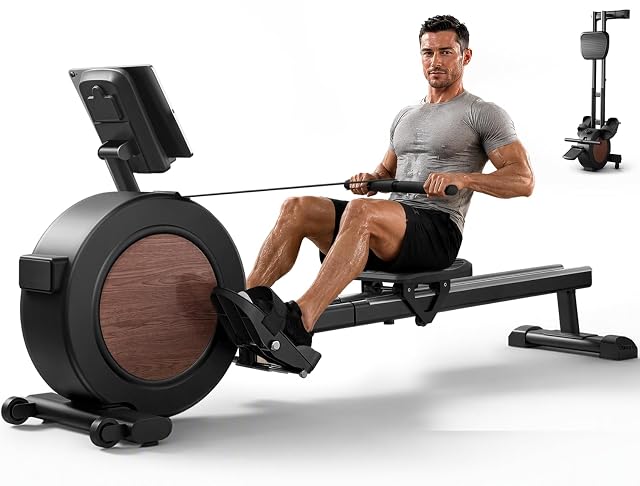
Magnetic, 110 lb resistance in 16 levels, 49.2 in dual rail, 350 lb, 25 dB stated, 2.9 sq ft stored
A magnetic dual-rail rower with the highest published resistance among the magnetic machines here, 110 lb across 16 levels, a 49.2 in rail for users 4 ft 5 in to 6 ft 5 in, a 350 lb capacity and 2.9 sq ft of floor when stored upright.
Best for: Stronger rowers who want a quiet magnetic machine with headroom at the top levels
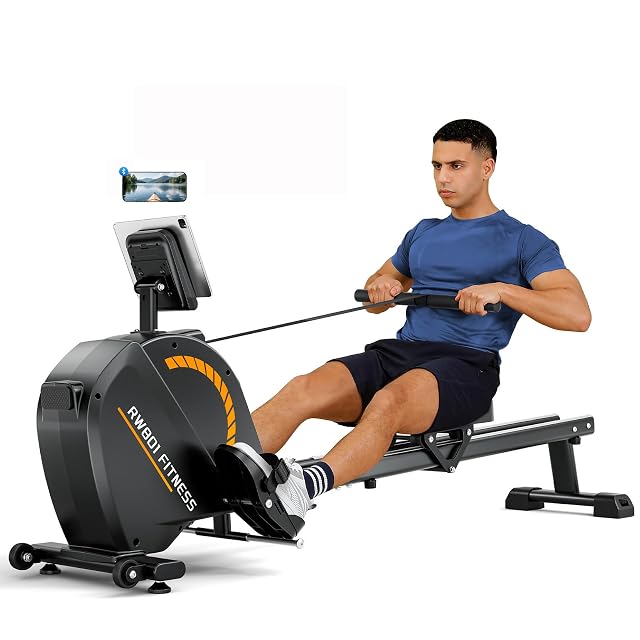
Magnetic, 12 lb flywheel, 66 lb resistance, 16 levels, 48.8 in dual steel rail, 350 lb, under 15 dB stated
A magnetic rower that publishes its flywheel (12 lb), its peak resistance (66 lb), 16 levels, a 48.8 in dual steel rail for users 4 ft 5 in to 6 ft 5 in, a 350 lb capacity and a stated noise level under 15 dB.
Best for: Quiet daily rowing in an apartment, with a long rail for tall users
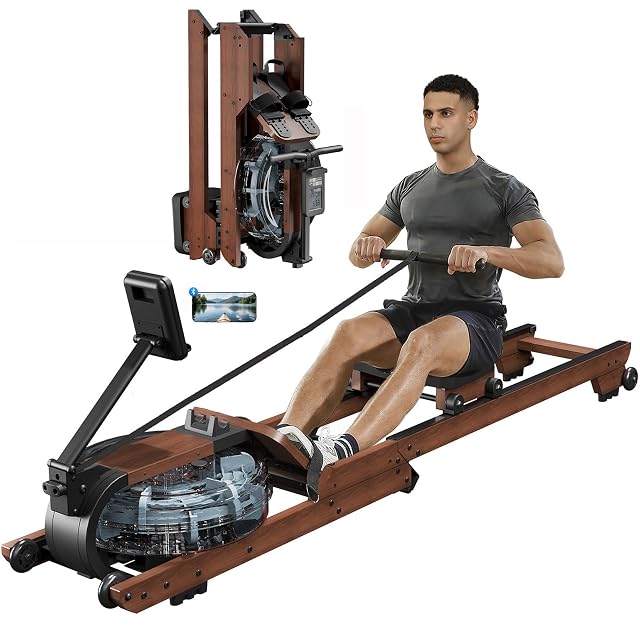
Water resistance, 6 water levels, solid wood, 180° vertical fold without draining, 350 lb, users 4 ft 5 in–6 ft 5 in
A solid wood water rower whose tank is sealed so it folds 180° to stand upright without draining, with six water levels, a Bluetooth monitor, a 350 lb capacity and a user height range of 4 ft 5 in to 6 ft 5 in.
Best for: Someone who wants the feel and sound of water in a room where the rower stands upright between sessions
A figure written into a sentence below was read once, on the day that sentence was written, and nothing has refreshed it since. The amount a shop is asking right now loads beside the product itself — that is the only one still current.