Skip to content

The best massage guns for 2026

A massage gun is a motor driving a head back and forth, and three published figures describe what it does mechanically. Percussions per minute is the speed, quoted as a range across the speed settings, and it is the number every listing gives. Amplitude — the stroke length in millimetres — is the one that actually distinguishes devices, and many listings omit it: a 12 mm stroke and a 5 mm stroke at the same speed are different tools entirely. Stall force, in kilograms or newtons, is the pressure at which the head stops moving, and it is the figure that tells you whether the device does anything once it is pressed into a muscle. Few makers publish it; those that do are worth noting for that reason alone. Beyond the mechanism, the practical figures decide whether it is used: battery capacity in mAh with a stated runtime, weight in grams, which matters because it is held at arm’s length behind a shoulder, and noise in decibels, which the better makers now publish. The heads supplied — ball, flat, bullet, fork — change the contact area, and a device with six heads is not better than one with four, it simply arrives with more plastic. Some models add a heated head or a force display; both are described rather than specified. This site reports the figures the maker publishes; what percussion does to a muscle is a medical question and is not one of them. We compare amplitude, stall force, speed settings, percussions per minute, battery capacity, mass and noise level.
This shelf, figure against figure

  1. AQXONG Mini Massage Gun

    24 W brushless, 1800 mAh, 460 g, 45 dB

    A mini gun that publishes its motor in watts rather than in a vague claim — 24 W brushless — with a 1800 mAh battery and a published 460 g mass.

    Best for: Somebody comparing on battery life and weight rather than on stroke

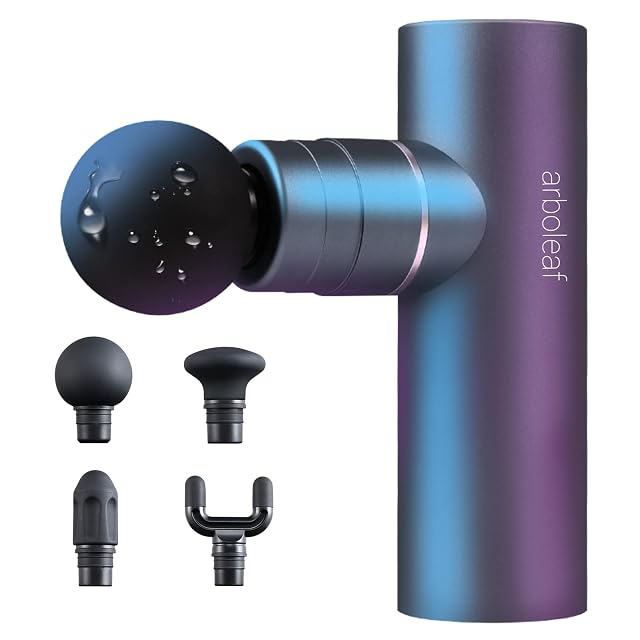
  2. arboleaf Mini Massage Gun CM20C

    Stall force 60 lbs, 6 mm depth, 1000–3200 rpm, 0.47 kg

    The only gun on this shelf to publish a stall force — 60 lbs — and the only one with a pressure-adaptive mode that raises speed automatically as it is pressed.

    Best for: Anybody who wants to know what happens when the device is actually pressed into something

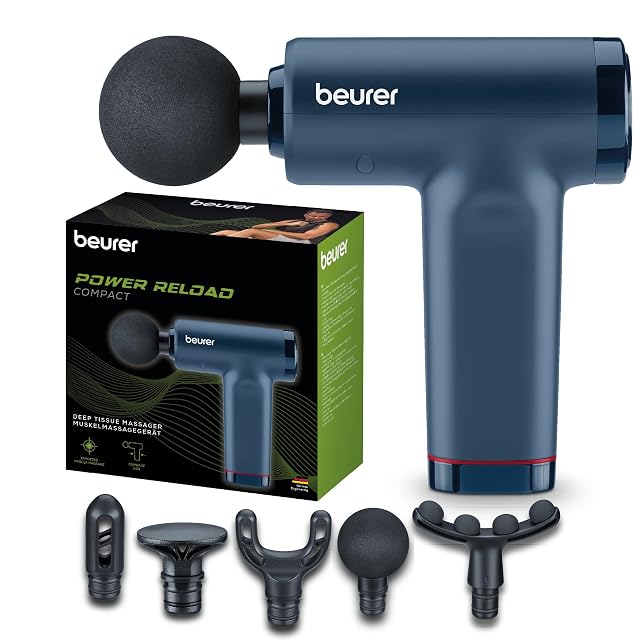
  3. Beurer PowerReload Compact

    46 dB at the first setting, 5 levels, 5 heads

    The only listing here to state the setting at which its noise figure was taken — 46 dB at the first level — from a maker specialising in health devices.

    Best for: Somebody who wants a figure they can actually interpret

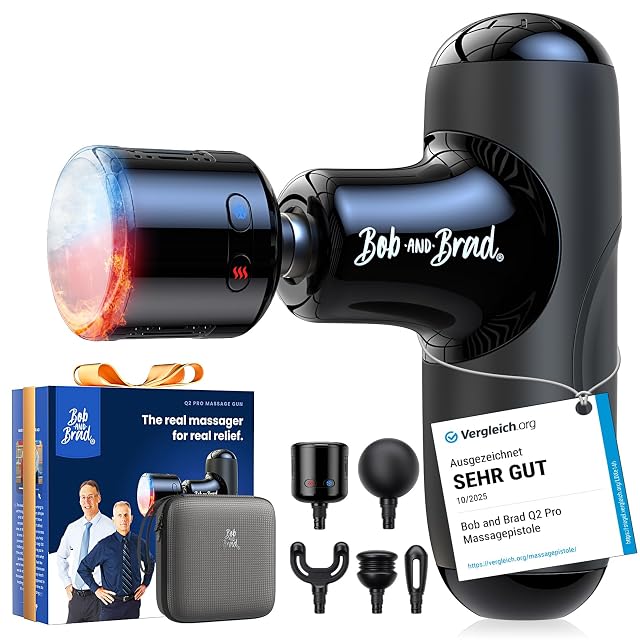
  4. BOB AND BRAD Q2 Pro

    7 mm amplitude, thermal head 40–45 °C / 10–15 °C, 430 g

    The only gun here with a heated and cooled head, publishing both temperature ranges — 40–45 °C and 10–15 °C — at 430 g and under 40 dB.

    Best for: Somebody who wants heat and cold from the same device

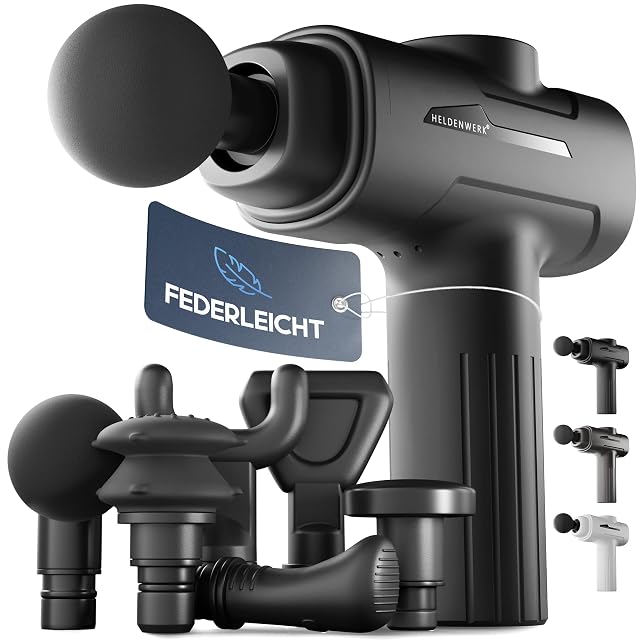
  5. HELDENWERK Mini Massage Gun

    10–12 mm amplitude, 3200 rpm, 1500 mAh, cooling

    A mini gun with a published 10–12 mm amplitude and an integrated cooling system for continuous use, charging in a stated 1.5 hours.

    Best for: Long sessions, where a device that heats up is the limiting factor

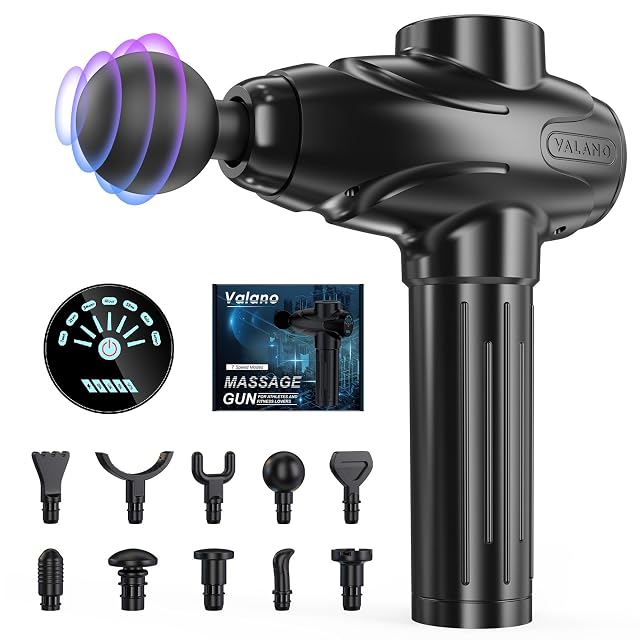
  6. Valano Massage Gun J01

    7 speeds 2200–3300 rpm, 10 heads, 2600 mAh

    The largest battery in this family at 2600 mAh, with a published speed range of 2200 to 3300 rpm across seven settings and ten heads.

    Best for: Somebody who wants the longest battery and will accept a high minimum speed

This category at a glance

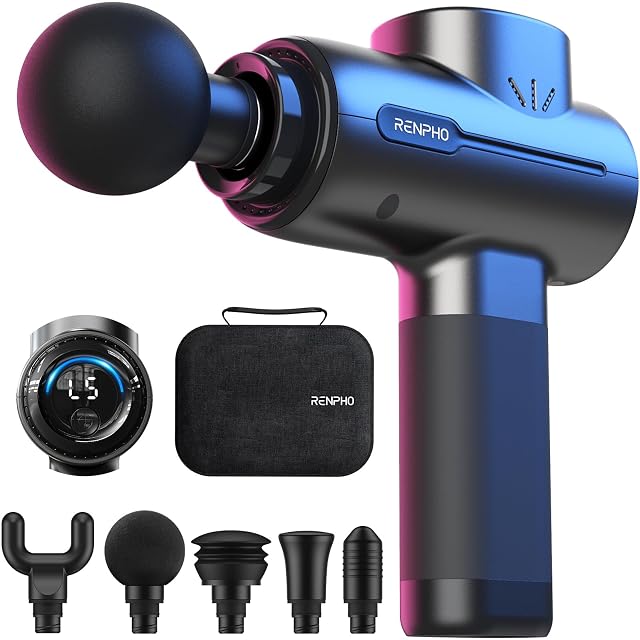
  • Highest Amazon reference in this category: RENPHO GM171-BK (B085NTR26K (one reference across 6 Amazon marketplaces)).
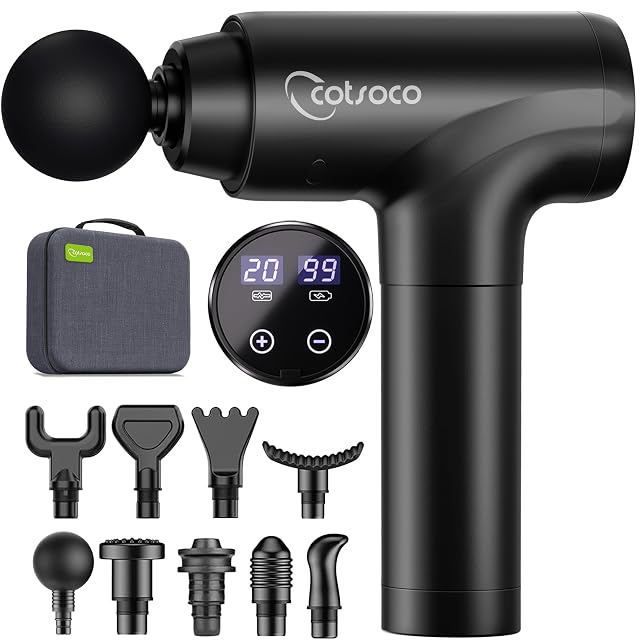
  • Highest Amplitude in this category: cotsoco M784 (12 mm).

Every model compared

Only the specifications at least four models out of five state. A column that is more empty than full compares nothing.

ModelPriceAmazon referenceAmplitudeBattery capacityMass

Sources and method

Specifications: manufacturer sheets and Amazon product pages. Prices and availability: Keepa. No product on this site has been physically tested.

Most recent revision in this category: September 20, 2026.

How we assess products